中文简体
中文简体 中文繁体
中文繁体 English

ITERATIVE STRATEGY,PRECISE ANALYSIS,REAL-TIME RESPONSE (Fully Customizable)
AI Quantitative Trading Development — Efficient Iteration, Precise Analysis, Real-Time Response
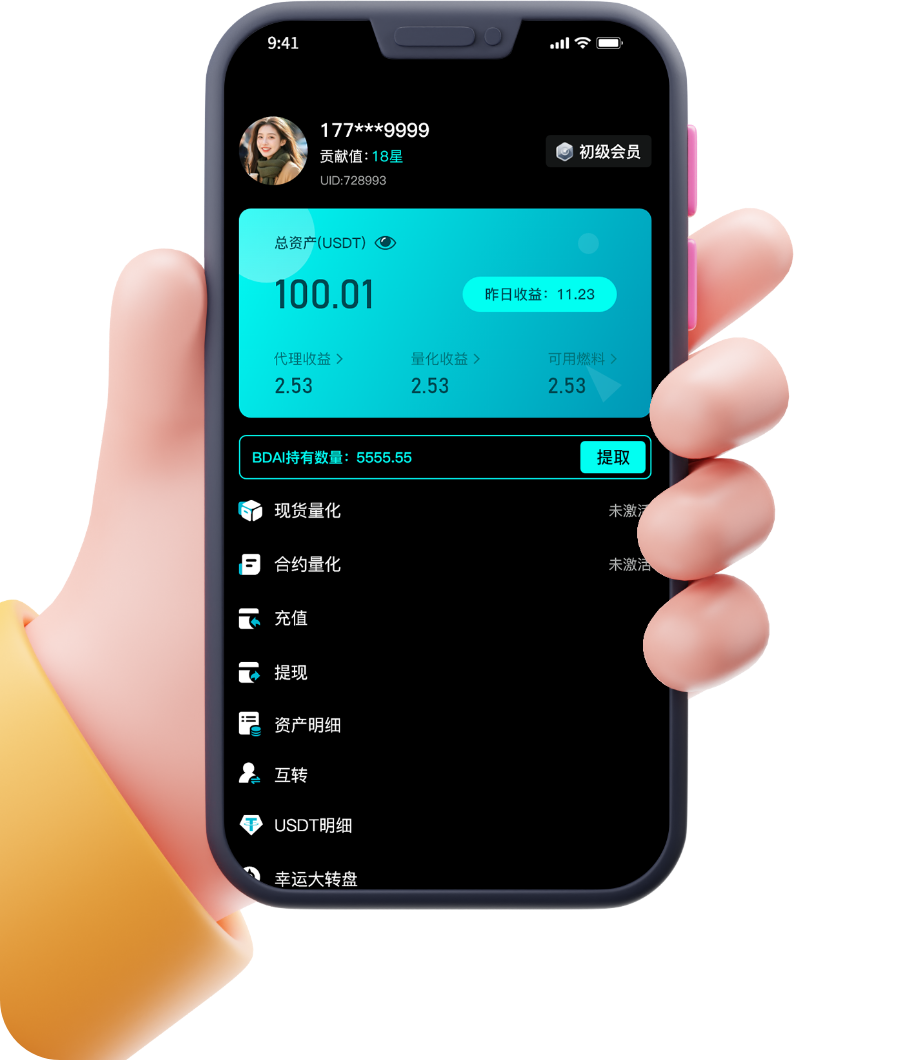
AI quantitative trading development is a professional service that combines artificial intelligence technology with quantitative trading logic, designed to create efficient and intelligent trading solutions for different types of investors and institutions. Its services span multiple dimensions including quantitative trading system development, strategy model development, intelligent risk control system development, and data service platform development.
In quantitative trading system development, we can build a full-process system achieving complete automation from data collection and strategy modeling to live trading, connecting to multiple exchange market data interfaces, rapidly generating trading signals and automatically executing orders.

Quantitative Trading
Covers data collection, strategy modeling, backtesting optimization, and live trading modules.

Strategy Models
Exclusive quantitative trading strategy models based on machine learning and deep learning.

Intelligent Risk Control
Automatic alert triggering with risk control operations such as position closing and reduction to safeguard funds.

Data Services
High-quality data support to enhance the accuracy of strategic decisions.
Core Advantages
AI Real-Time Computing Engine · Capture new trading opportunities instantly and enhance strategies
Efficient Strategy Iteration
Leveraging the self-learning capability of AI technology, quantitative strategy models can automatically adjust parameters and logic based on market changes, enabling efficient strategy iteration.
Precise Data Analysis
AI algorithms possess powerful data processing and analysis capabilities, capable of handling massive amounts of market data and uncovering hidden patterns and correlations.
Real-Time Trading Response
The system adopts a low-latency architecture design, combined with an AI real-time computing engine, enabling market analysis and order execution to be completed within milliseconds.
Personalized Customization
Customized and differentiated AI quantitative trading solutions can be tailored based on client trading habits, risk preferences, capital scale, and other requirements.
AI Quantitative Strategy Types
Automatically adjust parameters and logic based on market changes
Professional High-Speed Computing Power

Trend Following Strategy
Uses AI algorithms to identify medium-to-long-term market trends. When the market shows a clear upward or downward trend, it automatically generates trend-following trading signals to capture gains from trend continuation — suitable for markets with strong trending characteristics.

Arbitrage Strategy
Leverages AI models to rapidly capture price discrepancies across different markets and products, such as cross-exchange arbitrage, calendar spread arbitrage, and cross-product arbitrage. Generates stable returns as prices converge to reasonable ranges — relatively low risk, suitable for conservative investors.

High-Frequency Trading Strategy
Relies on AI's high-speed computing power and low-latency systems to execute a large number of trades within extremely short timeframes, profiting from capturing minute market price fluctuations. This strategy demands extremely high system performance and algorithmic efficiency, requiring specialized technical support.

Portfolio Hedging Strategy
Based on AI asset allocation models, builds diversified investment portfolios while using hedging instruments (such as options and futures) to reduce overall portfolio risk. When market volatility is high, it maintains upside potential while effectively hedging downside risk.
Application Scenarios
Meeting Diverse Trading Needs

Financial Institutions
Provides AI quantitative trading solutions for financial institutions such as brokerages and fund companies, helping them improve asset management efficiency and returns.

Professional Trading Teams
Meets the demands of professional trading teams for efficient trading tools and strategies, enhancing their trade execution capabilities and market competitiveness.

High-Net-Worth Individual Investors
Customizes exclusive AI quantitative trading systems for high-net-worth individual investors, enabling intelligent asset management and growth.

Cryptocurrency Trading
Adapts to the high-volatility characteristics of cryptocurrency markets by developing AI quantitative strategies suited for crypto trading, helping investors seize opportunities in complex market conditions.
Case Showcase
EXAMPLES SHOWCASE